On this page
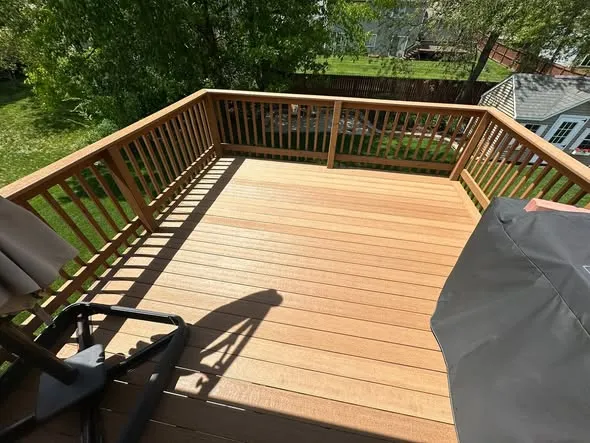
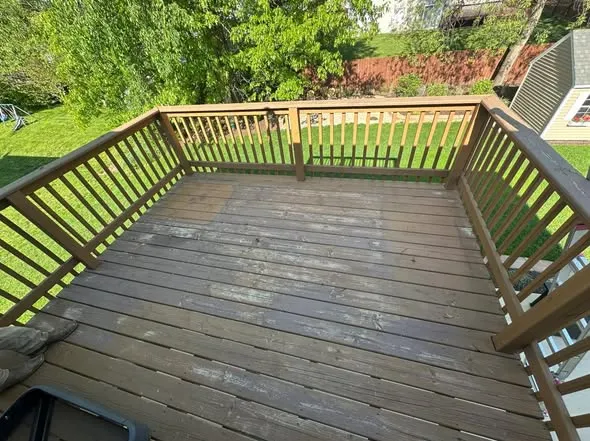
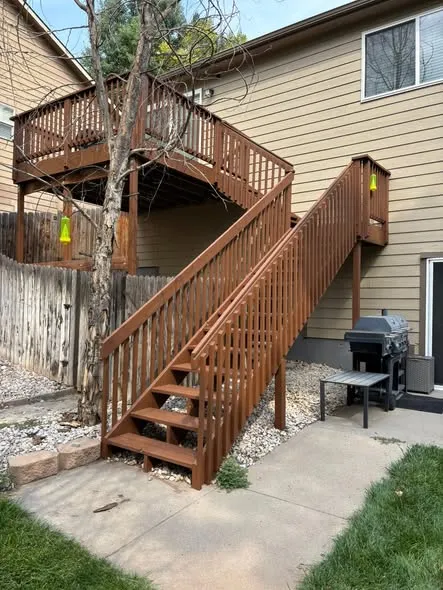
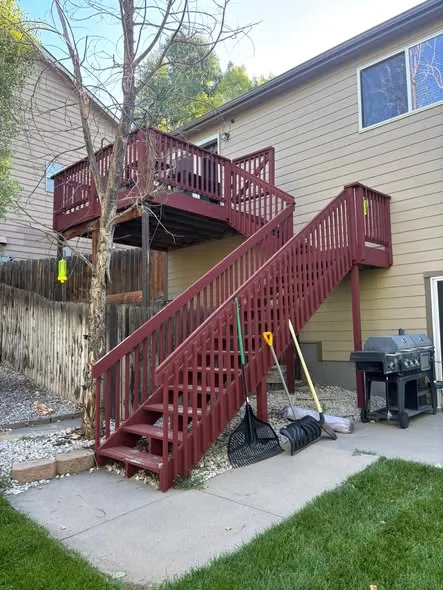
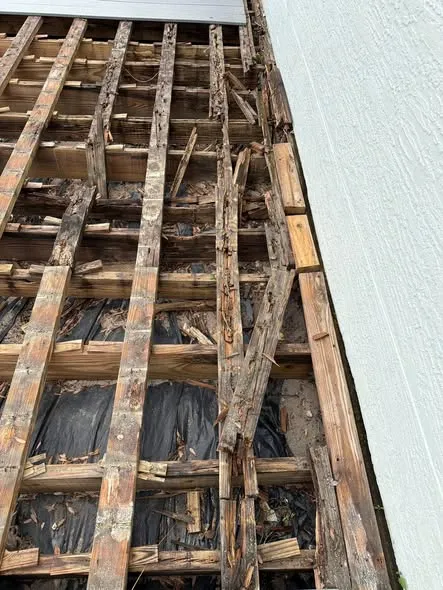
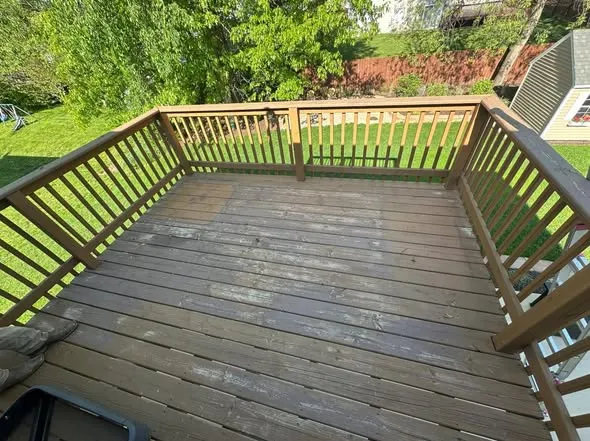
Your deck frame may have plenty of years left even when the boards on top look tired. Gray, splintered, cupped, and cracked boards are what people notice, but they are also the easiest part of a deck to replace. Deck resurfacing swaps out the surface and keeps the structure.
Around Greeley, we see this all the time. A deck built in the late 1990s or early 2000s has boards that have been baked by high-altitude sun and soaked by winter snow for twenty years. The joists underneath, protected from the sun, are often still in good shape. That is exactly when resurfacing makes sense.
Is your deck a good fit for resurfacing?
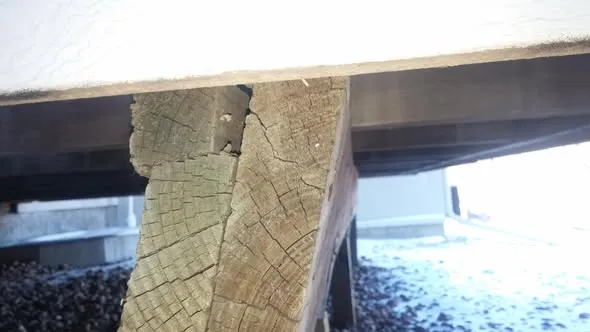
Resurfacing only works if the frame is solid. Before we quote it, we check the joists, beams, posts, ledger, and footings. A good candidate usually has:
- Joists that are solid when probed, with only minor wear on top
- A ledger that is bolted to the house and flashed
- Posts on concrete footings that have not heaved or sunk
- Boards that are cracked, splintered, cupped, or rotting at the ends
If we find a few weak joists, we can repair or sister them first. If the frame is rotted throughout, we will tell you that deck replacement is the better choice.
How deck resurfacing works
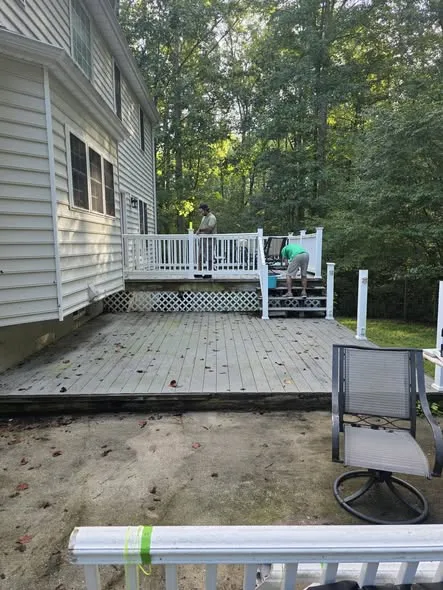
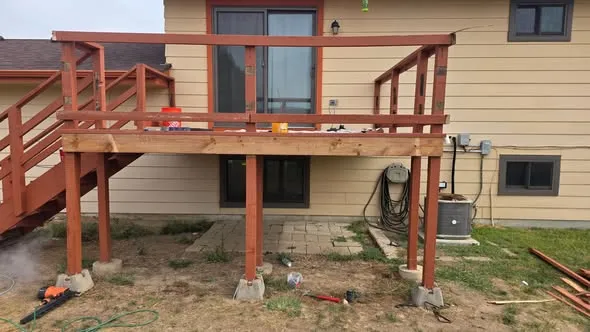
We remove the old boards, stair treads, and fascia and haul them away. With the frame exposed, we make any joist repairs, add joist tape to the tops of the joists, and check the spacing. Many composite brands call for joists no more than 16 inches apart, and closer for boards laid on an angle, so we confirm the frame meets the board maker’s rules.
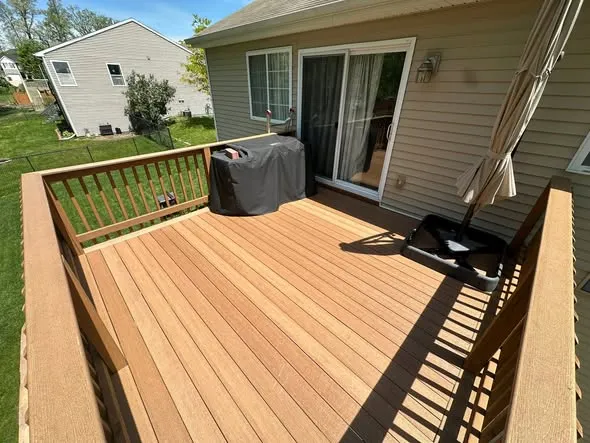
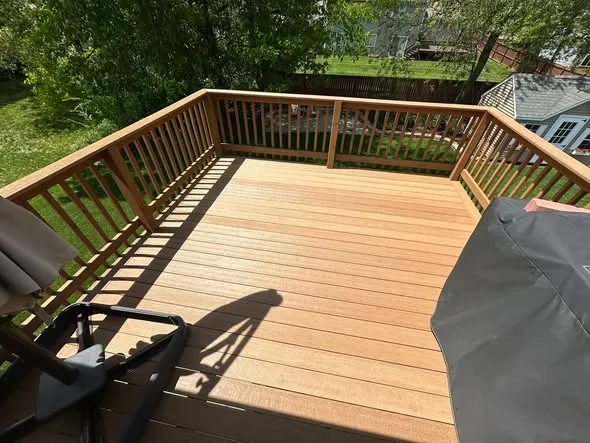
Then the new boards go down. Wood boards are screwed down with coated deck screws. Composite boards often use hidden fasteners that clip into the edge of the board, so no screw heads show on top. We finish with new stair treads and fascia boards to cover the rim joists, so the whole deck looks complete.
Wood or composite?
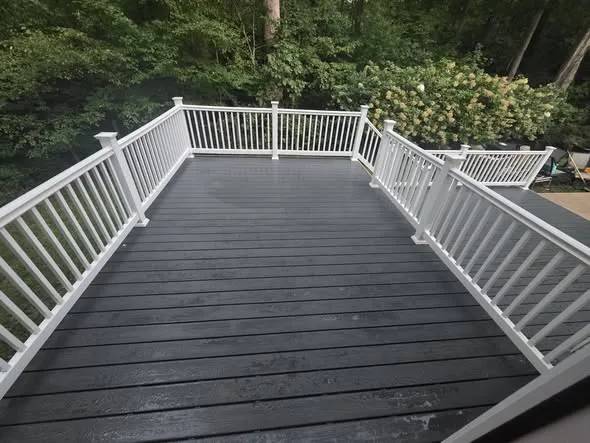
Both are good choices, and the chart below compares them. Pressure-treated pine costs the least and takes stain well, but it needs cleaning and staining every few years in Colorado sun. Cedar looks warm and resists rot naturally, but it still needs a finish to keep its color. Composite costs more up front and needs very little upkeep beyond washing.
Switching from wood to composite during a resurfacing is common. We just make sure the frame is ready for it first.
Why boards wear out so fast here
Greeley sits near 4,700 feet, where the sun is strong and the air is dry. Boards dry out, check, and crack in summer, then take on meltwater from about 35 inches of snow each winter. The code even rates the weathering risk here as severe. Board surfaces take the full hit, which is why they usually wear out long before the frame does.
Resurfacing in spring or early fall avoids the hottest days, when fresh wood dries too fast, and the coldest ones, when some composites are harder to work with.
Local tip
What to expect
Call, text, or send the form, and we reply within one business day. We inspect the frame first and give you a free written estimate with options for wood and composite boards. Once the work starts, most resurfacing jobs move fast, and we haul away every old board when we are done.
We resurface decks in Greeley, Evans, Windsor, Johnstown, Severance, Timnath, and the other towns around them.