On this page
A sagging corner, a bounce in the middle, or a deck that tilts away from the house are not cosmetic problems. They are signs that something under the boards has failed. Structural deck repair goes after that hidden damage directly.
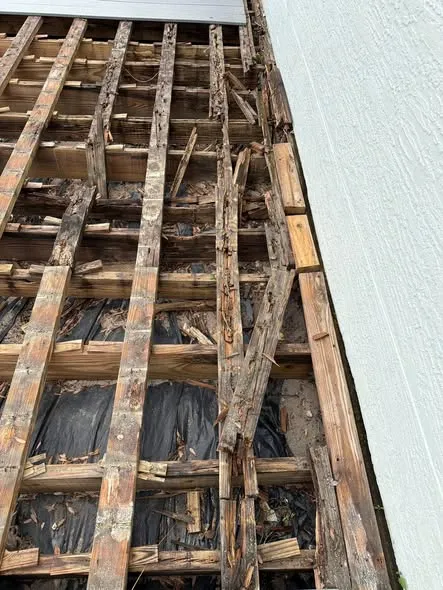
Many decks around Greeley were built with good wood but little protection. Water sits on top of the joists under every board, and winter after winter it soaks in. By the time the surface feels soft, the framing under it may have been rotting for years. The good news is that the damage is often limited to part of the frame.
Joist repair
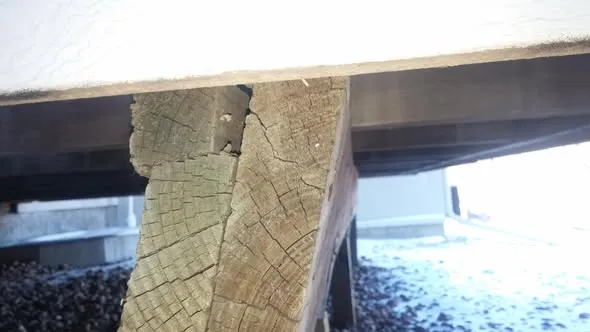
Joists are the boards that run under the deck surface and carry the load to the beams. The top edge of a joist takes the worst of the water. We check each one with an awl. Solid wood resists. Rotted wood lets the tip sink in.
A joist with a little rot on top can often be sistered. That means fastening a new, full-length joist tight against the old one so they share the load. A joist that is rotted through, split, or cut too deep gets replaced. When we put new boards back on, we add joist tape along the top edges to help keep water out in the future.
Ledger board repair
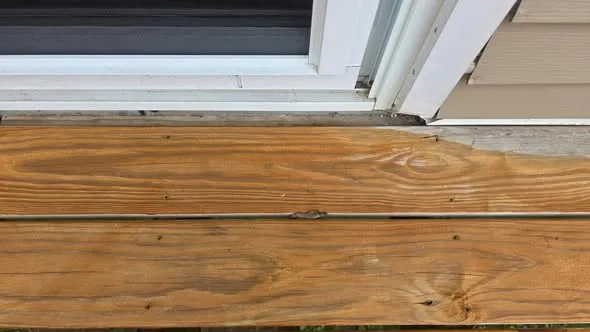
The ledger is where your deck meets your house. It carries half the weight of many decks, and it is one of the most common places decks fail. We look for three things: rot, how it is fastened, and whether it is flashed.
Older decks were often nailed to the house. Today’s code calls for lag screws or through-bolts, and flashing above the ledger to keep water away from the wall. When a ledger is rotted or poorly attached, we cut back the boards along the house, remove the bad ledger, check the rim of the house behind it, and install a new one with proper flashing and fasteners.
Posts, beams, and footings
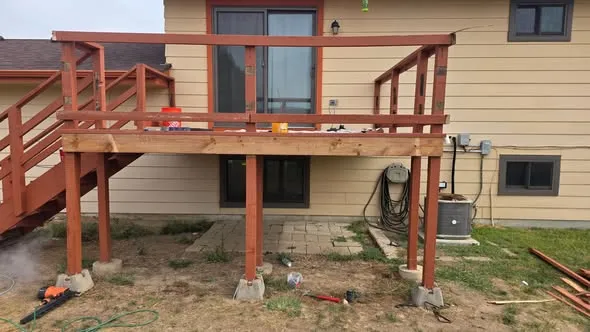
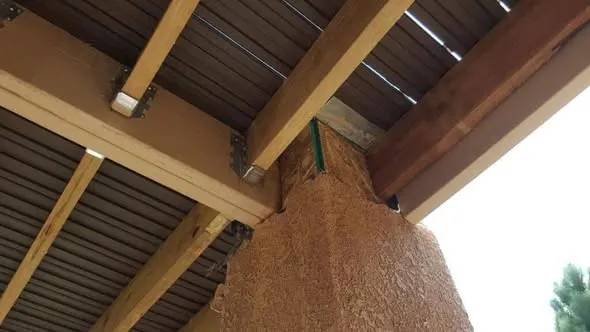
Posts that sit on the dirt or are buried in concrete tend to rot right at the ground line. Posts should stand on a concrete footing with a metal base that keeps the wood off the ground. We replace rotted posts and add post-to-beam hardware where it is missing.
Footings are the concrete pads that carry everything. In Greeley, Weld County, and Larimer County, footings need to reach at least 30 inches below grade so the frost cannot push them up. Shallow footings are a common cause of decks that heave, crack, or drift out of level after a few winters. We can reset or add footings under an existing deck when they are the problem.
If a door that opens onto your deck starts to stick or the deck slopes toward the house, check the ledger and footings. Movement there often shows up at the door first.
Local tip
Keeping the good framing
Our repair-first approach matters most on structural work. A lot of companies see one rotted joist and quote a whole new deck. If the beams, posts, and most of the joists are solid, there is no reason to throw them away. We repair the parts that failed and tell you honestly if the rest of the frame is near the end of its life.
Permits and code
Structural repairs on an attached deck may need a permit in Greeley, which enforces the 2021 International Residential Code. Any attached deck, and any deck more than 30 inches off the ground or over 200 square feet, needs a permit when it is built. We check with the building department when your repair calls for one and build to the code in effect.
What happens next
Call, text, or send the form, and we reply within one business day. We inspect the framing, show you what we found, and give you a written estimate that lists each repair. When the work is done, we haul away the old lumber and walk the deck with you.
We handle structural deck repair across Greeley, Evans, Windsor, Johnstown, Milliken, and the nearby towns.